
Breaking the Model.
Filmmakers, in Oregon and elsewhere, are building, then bringing their own audiences to the party

“I’ve covered box office results literally hundreds of times over the past 20ish years. In that time, there’s been a very clear formula: Franchises are the most reliable way to get butts in movie theater seats. Marvel, Star Wars, Harry Potter, Transformers, Fast & Furious, Minions, etc. etc. If you controlled those brands, you had the best shot at success.
In the past several years they have all, to varying degrees, been losing power. Gen Z just isn’t as interested in corporate managed film franchises. What do they want? This weekend provided a loud and powerful answer.
Something huge is happening to moviegoing right now and I don’t think Hollywood is going to ever be the same.” - Wall Street Journal Entertainment Industry Reporter Ben Fritz posting on LinkedIn

Over Memorial Day weekend, a twenty-year-old named Kane Parsons became the youngest director in history to open a film at number one at the global box office. His film, Backrooms, made $81.5 million in its first three days domestically. $118 million worldwide. A24’s biggest opening ever. The same weekend, Obsession - the debut of twenty-six-year-old YouTuber Curry Barker - became the first film since 1982 to grow its box office in both its second and third weekends, finishing with $104 million domestic. Both films came from directors who built massive online audiences before a studio touched either project. Both films arrived in theaters carried by communities that already existed. Star Wars was third.
This is being described as a disruption. It is not a disruption. It is a confirmation.
Parsons started posting found footage horror videos on YouTube as a teenager in 2022. His audience was not acquired. It was built, video by video, in relationship with people who returned because they trusted him. When Backrooms opened, it was not introducing that audience to Kane Parsons. It was giving Kane Parsons’ audience a new place to gather.
Now, yes, it doesn’t have the same box office numbers but that is roughly the same thing that rap artist Logic did with Paradise Records and what YouTube creator Skweezy Jibbs is doing with Skweezy Jibbs Makes a Movie. It’s what Bruce Campbell is doing with his feature film Ernie and Emma. It’s what H. Nelson Tracey essentially did with Breakup Season, shot in La Grande, when he released his feature to the social following he’d been building since before his first day of production.
The scale is different.
But the model is the same.
Oregon’s filmmakers didn’t wait for a replacement path to appear. Several of them started building a different one. And now that’s breaking the traditional model of indie film releasing.
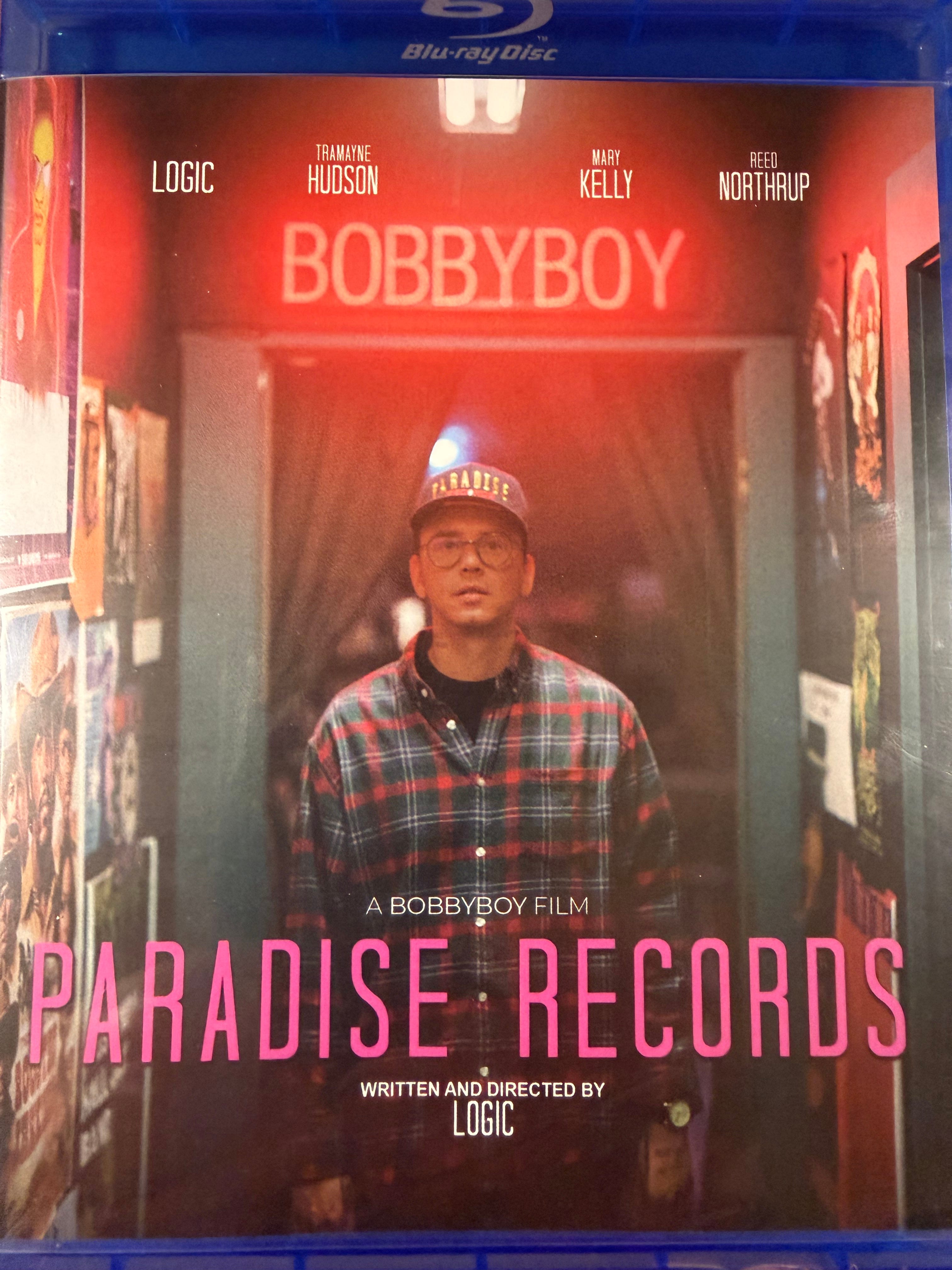
In 2023, a rapper named Logic who lives in Oregon had an audience of millions. He didn’t pitch a film to a studio. He made Paradise Records and sold it directly to the people who already wanted to see it. No intermediary. No distribution deal. No percentage disappearing into a pipeline of people who had nothing to do with making the film. Just a post on Instagram and a link to buy the film. On BlueRay no less.
Skweezy Jibbs Makes a Movie did the same with his own following of millions. Direct bookings into theaters and a live experience with the character that stumbles through life in a way that makes us laugh and look at ourselves again (somewhat uncomfortably, yes).
H. Nelson Tracey shot a feature called Breakup Season in Eastern Oregon. He grew a social media following in real time alongside his production, then released directly to that audience - the people who had been watching since before the movie existed.
Ernie and Emma premiered in Medford on Valentine’s Day 2026. Bruce Campbell chose his home audience first, then Portland, then, using his own cult celebrity, took it out on a national tour in partnership with Alamo Drafthouse. The order is not accidental. It is the model.
Yes, both Backrooms and Obsession have bigger, more far reaching results. They have garnered the attention of the national media and sent a big, bright warning flare across the bow of the Industry writ large.
But the Oregon examples aren’t experiments. They are a coherent and reproducible strategy: build the community first, then make the film, then bring the community to the theater. The audience is not the outcome. The audience is the engine.
The national film press is now noticing this model.
Oregon’s film ecosystem - one built on localized production rebates for sub-$1 million productions, the Creative Opportunity Program, the Eastern Oregon Filmmakers Residency, the Pathways placement program, The Bridge filmmakers intensive - is not a minor-league version of the real industry waiting for a call-up. It is out front, participating, encouraging, learning, supporting, building and producing filmmakers who are ready to do the very thing that just broke A24’s opening weekend record.
The traditional model asked filmmakers to make something, then find someone to find their audience for them. The model that Oregon’s local filmmakers have been practicing - by circumstance, by necessity, by the simple fact that the traditional machine was not available to them - asks filmmakers to already know their audience before the film is finished.
It turns out that is not a consolation prize for filmmakers without industry access.
It is the competitive advantage.