
Progress.
Five years ago we asked for some input from our community, and then we went to work.

Progress is often an oblique word.
It gets used to describe things that haven’t changed by people who need them to appear as if they have. We often work in the political arena, and it’s used a great deal in this context in those conversations. Sometimes it gets used as a consolation, as a deferral. We’re making progress. Which often means: not yet, maybe never, but please stop asking.
So when we use the word here, it’s worth being specific about what we mean.
In August 2021, Oregon Film sent a questionnaire to many in the state’s film and media community. And many people answered it, from Portland and Bend and Ashland and La Grande and Pendleton and Warm Springs and Salem and Eugene and St. Helens. Documentary filmmakers and grips and producers and screenwriters and actors and animators and drone operators and community media organizations and festival programmers.
Oregon Film asked them to rank twelve possible improvements to the state’s incentive and grant programs. And then to say more, if they wanted to, in the comments.
People appeared to want to say something, and, possibly more importantly, see change.
More grant opportunities please.
I would like to discuss workforce development sooner than later.
Would love to see a rural exploration.
The top priority, by a meaningful margin: raise the rebate percentages in the Oregon Production Investment Fund (OPIF). In 2021, the program offered 10% on in-state labor and 20% on goods and services. The community’s view was plain. Those numbers weren’t enough for the independent and local market. Raise them.
Second: develop grants and incentives specifically for regional production work in places like Bend and La Grande and Ashland and Eugene making films far from the Portland infrastructure, who needed the program to see them.
Third: physical space. Sound stages, production offices, training facilities, somewhere to work and gather and build.
Fourth: grants specifically for projects, writers, directors, and producers.
Fifth: broader support for small media business growth.
Sixth - ranked sixth, which is not the top but is still on the list - expanding the types of projects that could qualify for OPIF. Commercial production, for instance. Which at the time did not qualify.
This was what people said Oregon needed, in August 2021.
Five years later, here’s what changed.

OPIF now offers 25% on qualifying goods and services from Oregon vendors and 20% on qualifying payroll - up from 20% and 10% respectively. Combined with the Greenlight Oregon Labor Rebate (GOLR), which increased the incentive on production payroll an additional 6.2%, the effective combined labor rebate now reaches 26.2%. For independent productions working in the real economy of 2026, where cash flow is tight and the difference between a financeable project and an unfinanceable one can be a percentage point or two, this matters. The community named it the top priority. It moved.
Commercial production now qualifies. As of July 1, 2026, commercial work can access both OPIF and Greenlight which provides up to a 26.2% cash rebate on production spending in Oregon, below and above the line. For a commercial production sector that had operated outside most of the incentive structure, this was a door that had been closed for years finally opening. The survey respondents ranked it sixth. It was on the list. Five years later, it exists.
There’s also a dedicated “regional” production incentive fund, R-OPIF which adds rebate dollars on to production work outside of the Portland Metro zone. This had led to production spending in places like Bend, Ashland, Oceanside, La Grande, Grants Pass and Astoria. This has created further calling cards for those locations through the national and international release of those projects and recognition of them on the Oregon Film Trail.
And the Creative Opportunity Program was created. Signed into law after the 2021 legislative session, the same session that ran the year the survey was taken. The COP dedicates 2% of OPIF annually to the things the core incentive structure did not reach: project and filmmaker grants, workforce development, training, regional development, strategic partnerships. Roughly $375,000 a year flowing toward the parts of Oregon’s creative community that the rebate minimums leave out.
The Oregon Film Impact Grants. The Tell Your Story Grant. The Outdoor Adventure Film Grant. Our unique Pathways program that trains placements, places them in paid positions on sets and then provides mentorship. Lasting partnerships with the community organizations that survey respondents were already building from inside. Places like Open Signal, NW Documentary, Desert Island Studios, BendFilm, Film Southern Oregon, Lion Speaks, Eastern Oregon Film Festival, Outside the Frame, Catalyst Film Collective. Organizations built by and for filmmakers who understood that the door to the industry is not always at the front of the building, and that finding the side door requires more than talent.
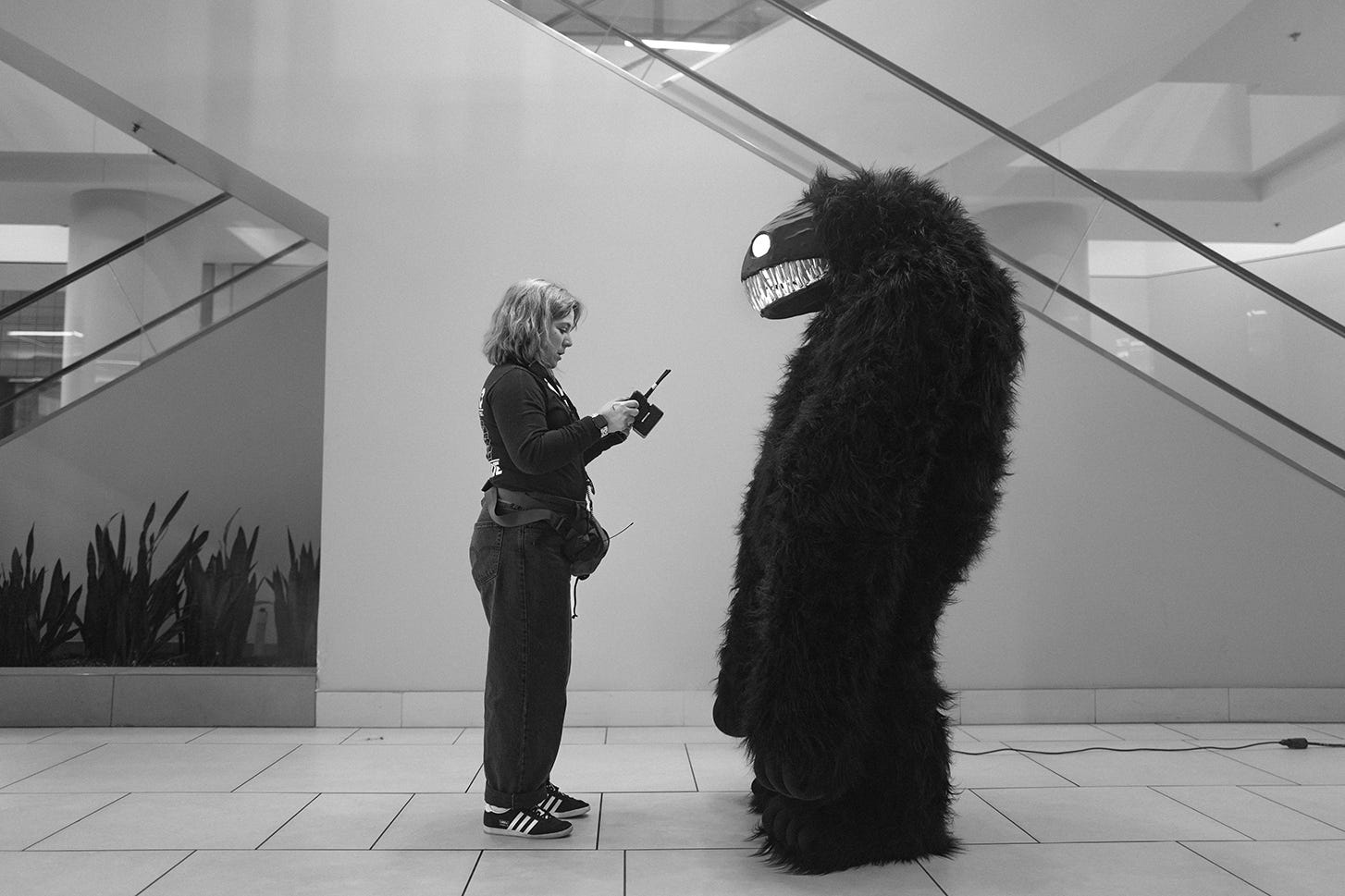
One of the Tell Your Story Grant recipients is Karina Lomelin Ripper, a Mexican-American filmmaker who participated in the 2021 survey. In the years since, she became a Princess Grace Honoraria recipient, a Spark Award winner, a 2026 Latino Film Institute Inclusion Fellow, and a member of the inaugural cohort of The Bridge: From Oregon to Industry. She was in the survey. She is now in the programs the survey helped shape. That is what progress looks like at the scale of a single life and a single career, not a headline, just a through-line, the kind that takes five years to become visible.
But, yes, not all of the goals were met and not all of the requests were fulfilled. Admittedly. And some took longer than others to achieve.
A world-class physical production facility - the sound stages and training spaces the community ranked third - remains an aspiration not a reality. But that doesn’t mean that efforts to fulfill this need have stopped. In fact, it’s far from it. And while we have expanded direct grants to individual filmmakers (like the Oregon Film Impact Grants), the full depth of small business support the survey named hasn’t found as much traction or funding.
Progress is not the same as done. We all know that.
The funding terrain has changed a great deal in the intervening time. Non-profits are struggling. Federal funding has been reduced or pulled entirely. Our own “long” legislative sessions only come every two years.
But here is the specific thing we mean when we use the word in this context.
In August 2021, a large group of people across Oregon took the time to answer a questionnaire about what they felt they needed from the programs we administer. They ranked twelve items which became six top priorities and then kept talking in the comments because they had things to say. Some of the top priorities they named have been addressed in concrete, measurable ways in the five years since. And others have not.
That’s not meant as a boast or a press release, it’s just what happened.
We like to think we listen. This progress report just helps to show that we actually heard what you said.