
Shift.
When the meaning of "growth" is given a different context

Oregon Film worked with 58 projects through its incentive programs in 2025. In 2024, it had worked with 54. More projects. More productions. More films being made in Oregon than the year before.
That can be seen as growth.
But then there’s another number: the average project budget dropped from $3.6 million in 2024 to $1.5 million in 2025. The median fell slightly too, from $575,000 to $475,000.
More projects. Less money per project. The industry getting broader and shallower at the same time.
That’s more of a shift.
The shift has causes, and they are not Oregon-specific.


US studio production has been moving offshore at an accelerating rate: to Budapest and Riga and Malta and London, chasing currency arbitrage and foreign cash rebates and labor costs and state provided benefits that American incentive programs simply cannot match at scale. Streaming platform mergers have reduced the number of executives, projects and buyers working within the market. The consolidation that is happening at Paramount and Warner Bros. and everywhere else means less product being commissioned, fewer deals being made, fewer mid-budget films getting greenlit by people in offices with acquisition authority.
The traditional path through the middle of the market - make a film between $1 million and $8 million, use debt and gap financing and pre-sales, premiere at Sundance or Toronto, sell territories, build a career - is, as Oregon Film’s Executive Director described it in a 2026 panel discussion, now “one in a thousand.” Not gone. Just lessened.
What used to be a reliable set of stepping stones between a first film and a sustainable career is now, largely, submerged. The center has thinned. And if the center disappears, the system stops supporting mid-level careers, mid-level projects, the filmmakers who needed one more film at that budget level to develop the craft and the credits to move up.
Oregon is not insulated from this. No state is.
But luckily we have a system that specifically supports locally made projects as much as it does larger projects coming form outside the state. A balanced program that seeks to retain as much as it recruits.
Here in Oregon we have been lucky enough to have recruited two larger, studio-backed television series into the Portland area over the last two years, and that is an achievement we both celebrate and acknowledge that our current incentive programs were enough to accomplish. Productions in and around Grants Pass, La Grande and Bend have also brought economic spending to other regions of the state. The programs we administer are still supporting nearly 4,000 jobs per year and direct spending of more than $150M annually.
Most states our size have not been able to do this of late.
There is also a positive shift that Oregon is a part of - the empowerment of new talent.
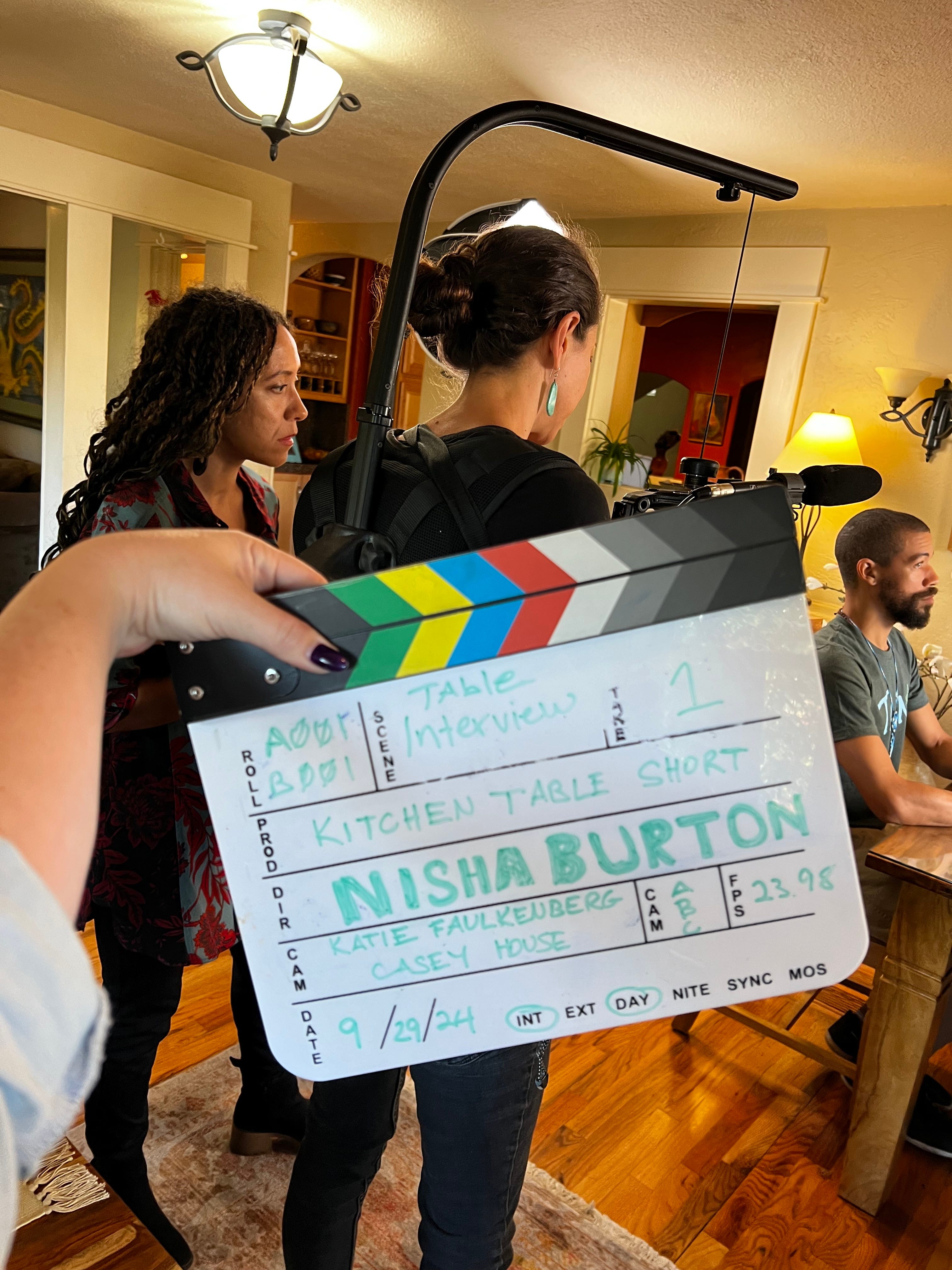
In the space where the middle used to be, something is growing. It does not look like what was there before. It is smaller, more personal, more rooted in place and community and the specific texture of the stories that Oregon filmmakers have been carrying around for years waiting for permission to tell.
Several local productions are now finding their audience through festivals, curated screening and self-distribution. In each of these cases the audience is not the outcome of the film. The audience is the engine. The people who will watch it are part of the financing, the distribution, the marketing, and the word-of-mouth campaign, often before the film is finished.
This is what the shift looks like from the inside.
It is the emergence of a genuinely local film culture. Not a local film culture waiting to be validated by a national buyer. Not a local film culture producing calling cards for careers to be built elsewhere. A local film culture making films for local audiences first, finding that those audiences are real and hungry and willing to show up, and building outward from there.
What sustains this shift, what keeps it from being simply the story of a sector in contraction dressed in optimistic language, is the direct support that has been quietly built underneath it.

Nearly $400,000 flowed through Oregon Film and its partners in a recent twelve-month period into the local creative economy: through a coordinated portfolio of production and post-production grants, through the Pathways training and placement program, and sponsorship of local screenings, festivals, and partner organizations statewide.
The partnership network behind those numbers includes Oregon Film and the Portland Events and Film Office working in direct coordination alongside Outside the Frame, Desert Island Studios, PAM CUT, the Oregon Media Production Association, the Indigenous Creative Stage Workers Alliance, Film Southern Oregon, the Central Oregon Film Office, the Eastern Oregon Film Festival, BendFilm, the Ashland Independent Film Festival and other state agencies like Travel Oregon and Travel Portland.
This is not just a single, four person state agency attempting to build a film industry. It is not just a one-person city-based agency finding there aren’t enough hours in the day to make a difference. It is a distributed system of aligned organizations, each doing the specific work it does best, connected by partnerships that have been built and maintained deliberately over years.
The shift is real. It is not entirely comfortable. It is not the story anyone would have written in advance.
But the films being made here, the ones selling out hometown theaters and screening at SXSW and world-premiering at the American Black Film Festival and touring nationally from a sold out Valentine’s Day debut in Medford, are not provisional films. They are not films waiting to become something else.
They are Oregon films.
Made here.
For here.
And then, from here, for everywhere else.